Somatic Practitioner & Bodywork in Hackney, London & Online



Somatic Healing - My Offering
New to practiting somatics with me?
Start with the 1, 2, 3…
I have two approaches to my work, Container Approach and Experiential Approach:
Somatics Practice - Container Approach
As I develop my practice, I learn and I change. In these past years, adapting my practice, I started to notice a real need for gentleness, structure and containment from the people I was working with, as well as for myself. With over 300 hours experience (as of July 2026) and over 100 individual nervous systems, I am currently navigating an approach which sees that people have a base knowledge to return to, something they can practice and call their own. I call this the Container Approach, as we navigate together, step by step.
Every new participant that decides to work with me with this approach, will go through different experiences - developed based on their circumstances and needs; however, the building blocks will be the same. No matter your previous experience with somatics, we will start from the basics and move towards empowering you to continue the practice outside the sessions.
Somatics Practice - Container Compass
We are living through floods of heart-wrenching events, genocide, climate collapse, mass unemployment, the heightened experience and fear of active racism, transphobia and ableism. For many, maybe including you as well, this is a time where so much feels outside of our control.
I am reminded by the teachings of somatic teacher and political organiser Prentis Hemphill, that, before giving it all to change the world, we are called to look in. That is not to say, ‘withhold action towards collective liberation’, or stop any changework movement you’re organising or want to be involved in.
We are called to look in, to know: why are we moving?
What keeps you moving in a direction that is aligned with that which you truly care about?
A somatic practice I teach is inspired by Spenta Kandawalla and Staci Haines, Somatic Centering, found in their method called Politicised Somatics. This involves connecting to an embodied center as well as a spiritual center: your sense of purpose; that which you care to see and dream of in the world.
What Happens in a Somatic Session?
Step 1. Coming home
We start with the inner world because when the world outside changes, we need a grounding sense of self, or a sense of purpose to come back to and figure out the next steps. Your space of respite, your space of power, your space of hope - your space, that no one else gets, but you. This is the step where we explore body awareness, helping you reclaim your own body language and map sensations, emotions and experiences on your soma.
Step 2. Soma as the mirror
Acknowledging that the inner world is connected to the outer. The soma is a mirror of the systems that work with and against us, individually and collectively. As an example, one intersection of those systems is our social positioning. I am a white East European, mixed class migrant, in a queer, trans non-binary and able-leaning body (with some mingling chronic fatigue and inflammation symptoms). I see my social positioning as both a source of resource spaciousness, abundance, that which can be shared with others. At the same time, other parts of my social positioning, in the same soma, can be a source of weight: nestling inflammation, tightness, numbness. This anti-oppressive somatic lens acknowledges that the conversations between the world we live in and our reactions to it—whether based in our lived trauma or systemic experience —are called habituations. These are the ways we have learned to survive, feel, and be in the world.
Step 3. Finding and building your resources
I often think about this as - ‘what makes me feel more centered and abundant?’. Is it taking a step back and noticing the colors around you? Is it trance work? Is it a cold dip? I used to use the words ‘to feel at ease’ a lot, and I discovered that they’re tricksy ones. Do I want to feel at ease when the political climate around me is threatening my and my partners’ and close-one’s existence? No. However, I do want to feel able enough to hold my grief and use my inner fire wisely. Would ‘at ease’ give me the power to change a habituation? Maybe in some cases, for example, if I am living so much in an anxious body that I feel stuck, bringing ease to the soma might be a big relief. Step 3 is all about equipping you with resources, and the knowledge to know what resources to call upon when.
Step 4. The release
Finding resources can take time, practice and trust. Prepare to explore. We do movement, stillness, breath, vocalisations, bodywork, and we co-regulate. Eventually, when the soma feels safe enough, a somatic release can happen, a completion of a ‘stress cycle’. A somatic release creates the spaciousness needed in order to create a new pathway in the body-mind. The resources helps the release to happen, and another resource can then be introduced instead of the old habituation.
Step 5. Alignment in action
Bringing the inner and outer information all together, to change our responses, so that they are in alignment with our soma and purpose. I believe that, having access to our soma intelligence gives us access to more choices: in how we behave, how we respond to our needs, how we respond to our wounds in relation, how we do changework. This happens with two ingredients: the desire to create this alignment + a sense of centering. In this step, we weave your inner awareness and practiced resources into the real-world scenarios of your life.
Step 6. The spiral journey
The truth is, as much as I am portraying it as a linear journey - it is not. Think of it as a container, the steps are the pillars. We will often come back to the basics, and work with your rhythm and needs.Whether we meet for somatic bodywork in Hackney or for online somatic coaching, I am not here to dig deep into your trauma story. I am here to witness and co-regulate, as we create more somatic spaciousness together. By practicing and teaching you ways to release and let go somatically, I support you in coming back to your center so you can connect with what is truly important. My practice is a gender-expansive space dedicated to supporting your agency and body-mind alignment.
Somatic Practice - Who is this not for?
Those who are currently in an active mental health crisis. Those who are seeking talking therapy or a pathway to mental health diagnosis.
Somatic Practice - Who Can Benefit from Somatic Guidance?
Those who have tried talking therapy and feel like there is something missing, or feeling stuck in particular emotions or sensations. Anyone looking to try out a body-centered way of processing. Those who enjoy practices such as breathwork, movement, visualisation, meaning making through creative ways. Queers and trans, neurodivergent folk who are tired of being unseen in their therapeutic work.
Somatics Practice - Experiential approach
If you are in a space where you are feeling called towards delving deeper in the world of embodied choice making, or feeling called to let go - and something within you is signaling that doing this through the medium of the body, or being held by a body-centered practitioner is how you would like to do this; you might be looking for an experiential approach.
Experiential Approach - Container Compass
This particular approach stems from my experience as a somatic, body and energy worker; as well as through the curiosity and the intuition that guides me. It is experiential as it is more relational, it is more tied to my own ancestral and folklore knowledge and fits closest to an energy work framing. The pace and depth of exploration at which I work with is still trauma-aware, centered in consent, and adjusted to meet you where you are at. Additionally it also considers our somatic connection.
Experiential Approach - Who is this for?
I do not use this experiential approach unless I have clear indicators that the container for the work is solid. The participants I usually work in this way with are those who have had successful long-term therapy, have a reliable support network or their own practices to process and reflect post-session, are skilled at asking for care as well as self-soothing, can clearly communicate boundaries and adjustments, are accountable for their part of a relational dynamic.
Experiential Approach - Who is this not for?
New participants of somatics and embodied practices. Active PTSD-like symptoms or in an active crisis or big life change (examples: moving home, experiencing the death of a loved one, coming to terms with a new health condition). Those who do not have an already established and trusted support network, or do not feel comfortable asking for care and support. Those who have never experienced therapy before, or do not have an active connection with a past/trusted long term therapist or peer counsellor.
What is Somatic Practice & Nervous System Regulation?
Somatics Definition
‘sōma’ comes from the Greek word for body. A quick search can tell you that the term ‘somatics’ might have been introduced by American movement therapist and philosopher Thomas Hanna, who defined as the study of one-self through the lense of internal perception (interoception) - or said more holistically, through the lense of the connection between mind, body and spirit.
Somatics in the way we understand it today, also include practices of awareness to external stimuli (exteroception). The perception of our environment - what we see, hear, touch, taste, smell; as well as our interaction with it - how we hold our bodies in these environments (proprioception and kinesthesia). All that in the context of land, time, politics, spiritual guides and the chaos of the universe. Poetically, somatics is a new way of being; aware and moving with the interconnectedness of what is within us, what and who is next to us, what and who is around us, and everything that was and it is yet to come.
Most importantly, somatics have existed in our society for longer than we can remember. In our ancestors’ singing circles, their griefing and wailing practices, their jolly community dancing, and so much more.
In the way it’s been shaped over time, I like to think about somatics as an umbrella term for activities and practices that enable: the integration of the observer (the self), with their own inner world, as they navigate the undeniable link with the environment and contexts around them.
Can you think of an activity where you feel connected to your inner world?
Where the self that you carry on the day to day is in touch with your body, mind and spirit?
Dancing, could be an example of somatic activity…
…one that has been a community ritual for celebration in many different cultures throughout different times.
So could noticing that you are hungry, acting on it by eating, feeling at ease for satisfying the hunger, growing confident that you can take good care of yourself.
What is Somatic Practice?
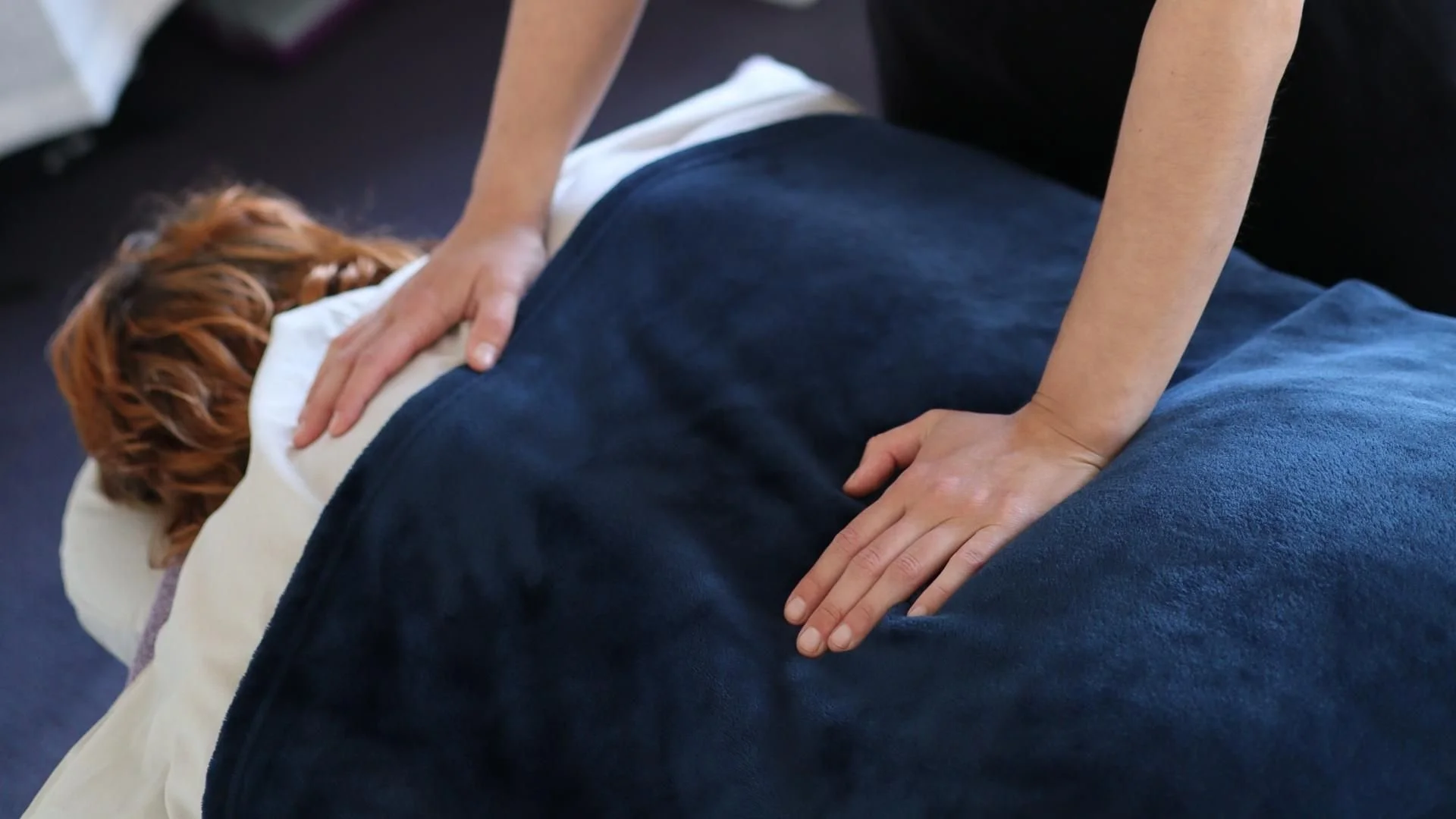
Somatic practice or somatics practice, is a type of alternative wellbeing modality which, at its core, aims to nurture and develop awareness of bodily sensations. Many somatic practices also include a focus towards body-centred action - for example in somatic massage, the practioner is guided by the participant’s voiced sensations…
‘ Practitioner: I will now suggest moving my hands towards the back of your head. Let me know if the back of your head would like my touch.
Participant: The back of my head felt netural. Now that you have suggested that, it feels more pleasant - tingly and warm. I am ready for touch. ‘
Some examples of somatic practices that you might know are: Yoga, Qi Gong, ecstatic dancing, breathwork, somatic therapy*.
In the somatics I learnt and teach on, the practice we do together is also the practice to be carried on, outside the guided sessions.
In session we are interested to find a type of practice that functions alongside your day to day life, alongside your abilities, capacity and bouquete of familiar sensations and feelings - so that it is accessible for you to build the resillience neccessary to continue moving towards the collective wellbeing purpose.
What is Somatic Therapy?
Somatic therapy is a form of therapy that integrates the connection between mind and body to help people process stress, tension, and emotional holding patterns.
It is important to clarify that I do not offer clinical ‘therapy’ or ‘psychotherapy’, as I am not a licenced mental health professional or a clinician. In practice this means:
I do not diagnose or treat ‘clinical disorders’ or psychiatric conditions.
I do not work with individuals currently in acute mental health crisis.
I do not offer psychological analysis or talking therapy.
Many modalities within the somatic field are inherently non-clinical. While these approaches frequently touch on therapeutic material, practitioners in this space—including myself—hold specialised certifications in areas such as somatic coaching, bodywork, and nervous system regulation without practicing as clinical psychotherapists.
This framework offers rich, experiential skills to support participants in personal integration, releasing held stress, developing body awareness, and restoring nervous system resilience.
Where My Practice Fits in the Somatic Landscape
Somatic Experiencing (SE): Developed by Dr. Peter Levine, focusing on releasing trapped stress energy and completing nervous system responses from past trauma.
Sensorimotor Psychotherapy: A clinical modality combining body-based exercises with cognitive psychotherapy principles.
Hakomi Method: A mindfulness-centered form of somatic psychotherapy.
HERE: Somatic Bodywork & Guidance: Non-clinical physical practices, movement, touch, and breathwork focused on nervous system health and embodied awareness. This is where my practice sits.
Somatic Practitioner
What does a somatic practitioner do?
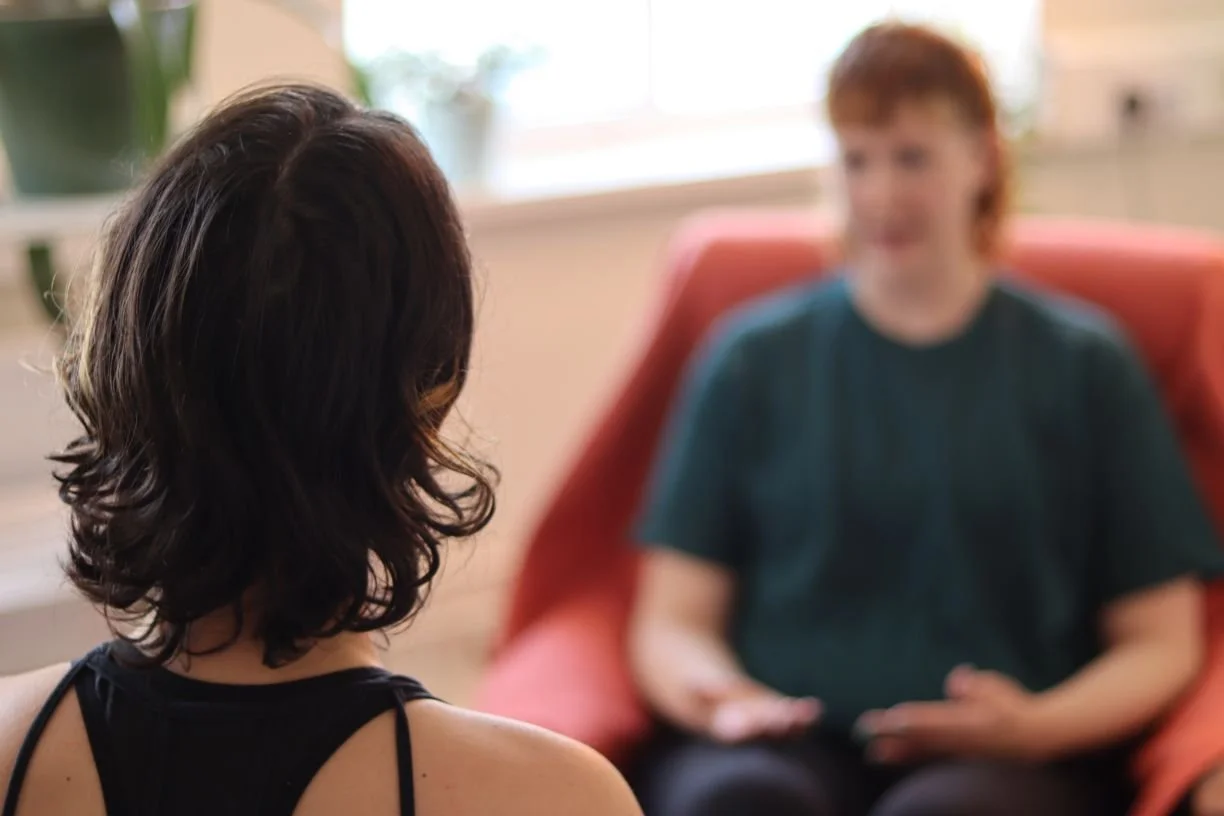
Imagine the somatic practitioner as a teacher: there to share their knowledge and create an inclusive and engaging environment for learning. Some of the main subjects of learning: mind-body connection, self-awareness, processing and release of unhelpful patterns; and how to adapt to change using the aforementioned awareness and consequential opening.
Somatic practioners are not therapists or counsellors (unless they have specifically trained in psychotherapeutic or counselling methodologies such as Somatic Experiencing), and they do work with material that could fit in the therapeutic realm. That might look like an emotional release during or after a session (i.e. crying or shaking), or it might look like visualising your ancestors and hearing what they have to share with you.
Somatic practitioners draw upon a wide range of experience and knowledge, depending on what methods they have been trained in, or what informs their practice. Some examples of what different disciplines of somatics could be working with are: patterns of behaviour (e.g. Somatic Coaching), patterns of physical holding (e.g. Clinical Somatics), embodied patterns of emotions and sensations (e.g. Somatic Experiencing), patterns of holding and movement (e.g. Alexander Technique, Hatha Yoga Asana); some practices such as Generative Somatics/Politicised Somatics and The Resilience Toolkit combine techniques and focus on how to use somatics for collective liberation. For the ease of the explanation, I added examples for each discipline - however, most times, there is a lot of overlap between the different disciplines. If reading this leaves you feeling even more unsure of what you’re looking for, that’s precisely what a consultation is for - book in a free 20 min discovery call!
My Somatics Practitioner Lineage
The somatics I practice is based on Stephen Porges’ Polyvagal Theory and it is influenced by Pete Lavine’s Somatic Experiencing, Spenta Kandawalla and Staci Haines Politicised Somatics, and by my own practice with a plethora of inspirational teachers, coaches and therapists, from which I will mention: Rose C Jiggins (Transforming Touch and Internal Family Systems, 2023-present), Gisela Lopez (Energy Worker and Teacher, 2023-2025), Jane Mann (Somatic Coach, 2019 - 2022). I also weave in my learnings from Integrative Changework Coaching Diploma with Melissa Tiers (2023-2024), Therapeutic Massage Diploma Level 3 with School of Bodywork Exeter (2021-2022), and 200h Yoga teacher training in Hatha &Vinyasa Yoga (2018); and my own practices of: learning how to pace as I navigate long term post-viral fatigue, altar making and connecting, sauna going, wild swimming, camping, walking and hiking.
Most importantly, the somatics I teach are influenced by my own lived experience of practicing as I was moving through the trauma of multiple cases of sexual assault and harassment (between the ages of 14-24) which, at the time, had left me in a poor relationship to my sense of self, my body, my boundaries and needs - and subsequently in poor relation with close ones and the collective. Somatics has been integral to finding a center again.
The somatics I teach are also influenced by my lived experience of untangling from white supremacy, colonial values and expectations. I continue to practice through those experiences with awareness that there is no end point of this work. What is around me is always changing so I am committed to tune into that, stay open and in learning, hold onto my center as I adapt with every change. I share the internal acceptance that sometimes I’ll get it wrong and sometimes even if it feels right, it might still feel wrong to someone else. My openness to feedback, my connection with being accountable for my actions and the prospect of change, they are all driven by my own resilience and capacity which I build through practicing somatics.
As a somatic practitioner, I am not required to comply with a code of ethics and regulation. However, as a trauma-informed somatic practitioner who has a deep interest in collective liberation, it is important to me to create safer spaces and practices. This involves but is not limited to: continuing my training through reading and/or listening to related books and podcasts; attending somatic related courses; having regular exchanges with other practitioners; checking in with and unpacking my bias and privilege through regular reflection; holding myself accountable through monthly supervision 1:1 with Sage M Stephanou, founder of Radical Therapists Network (and until March 2026 Rose C. Jiggens from True Self Systems: Somatic & Family Constellations Therapy ) and occasional group practice and supervision with Lily Masco, Clinical Hypnotherapist and support instructor for The Center for Integrative Hypnosis by Melissa Tiers; attending practitioner groups, such as the Trans and Queer North London Bodyworkers group I co-created, the Queer Bodyworkers collective pioneered by clinical massage therapist and somatic practitioner River Molloy from River Flow Therapies or the co-run practice book club based on Jessica Mullan’s Decolonising Therapy book: where we engage in emotional discernment and processing of whiteness, systemic harm, racism, climate collapse, ethical dilemmas and more.
Have any related questions? Drop me a message.